| Home | Profile | Vita | Repertoire | Works | Contact |
About Me
During my school years, I took guitar lessons on my own initiative, later adding piano and organ. For a time I even hesitated between guitar and organ as my principal instrument for future musical studies, owing to the musical climate of my hometown Pforzheim (Germany) in the era of the outstanding Director of Church Music Rolf Schweizer, in whose oratorio choir I was able to become acquainted with many of the great works of the Western musical tradition.
In the end, however, the decision fell in favour of the quieter instrument, and I began a degree in music education in Karlsruhe (Germany) with guitar as my major subject, later adding musicology as a subsidiary field. Formative teachers during those years were Wilhelm Bruck (guitar), Jürgen Hübscher (lute), Herbert Seidemann (piano), Martin Schmidt (conducting), Rudolf Kelterborn (music theory), and Ulrich Michels (music history). Numerous workshops with distinguished guitarists, as well as private instruction with Hans-Michael Koch in Hanover (Germany), accompanied my studies. I subsequently attended the masterclass of Oscar Ghiglia at the Chigiana Music Academy in Siena (Italy) as a scholarship holder, and completed my academic training as a guitarist with a scholarship from the German Academic Exchange Service (DAAD) in Vienna (Austria) under Konrad Ragossnig. My studies in composition with Wolfgang Rihm then brought me back to Karlsruhe, before I concluded my formal training with a further year of composition study in Basel (Switzerland) with my former teacher Rudolf Kelterborn.
At that point, my years of apprenticeship seemed to have come to an end. Yet in 2008–09, owing to a playing disorder, I received decisive new impulses from the eminent Dutch musician-physiotherapist Gerrit Onne van de Klashorst, then already over eighty years old, who imparted to me a deeper understanding of instrumental technique — one that in certain respects departed fundamentally from traditional doctrines.
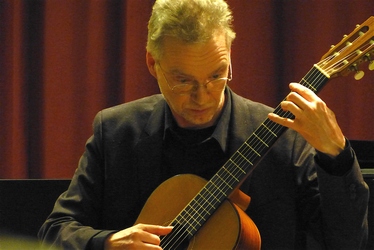 My compositional output — works for various solo instruments, vocal and chamber music, as well as choral and
orchestral works — was written and performed almost exclusively during the 1980s and 1990s for a simple
reason: throughout those years, it was the guitar that provided the more substantial part of my livelihood and thus,
quite naturally, gradually came to assume an ever greater role in shaping my professional career in its entirety.
My compositional output — works for various solo instruments, vocal and chamber music, as well as choral and
orchestral works — was written and performed almost exclusively during the 1980s and 1990s for a simple
reason: throughout those years, it was the guitar that provided the more substantial part of my livelihood and thus,
quite naturally, gradually came to assume an ever greater role in shaping my professional career in its entirety.
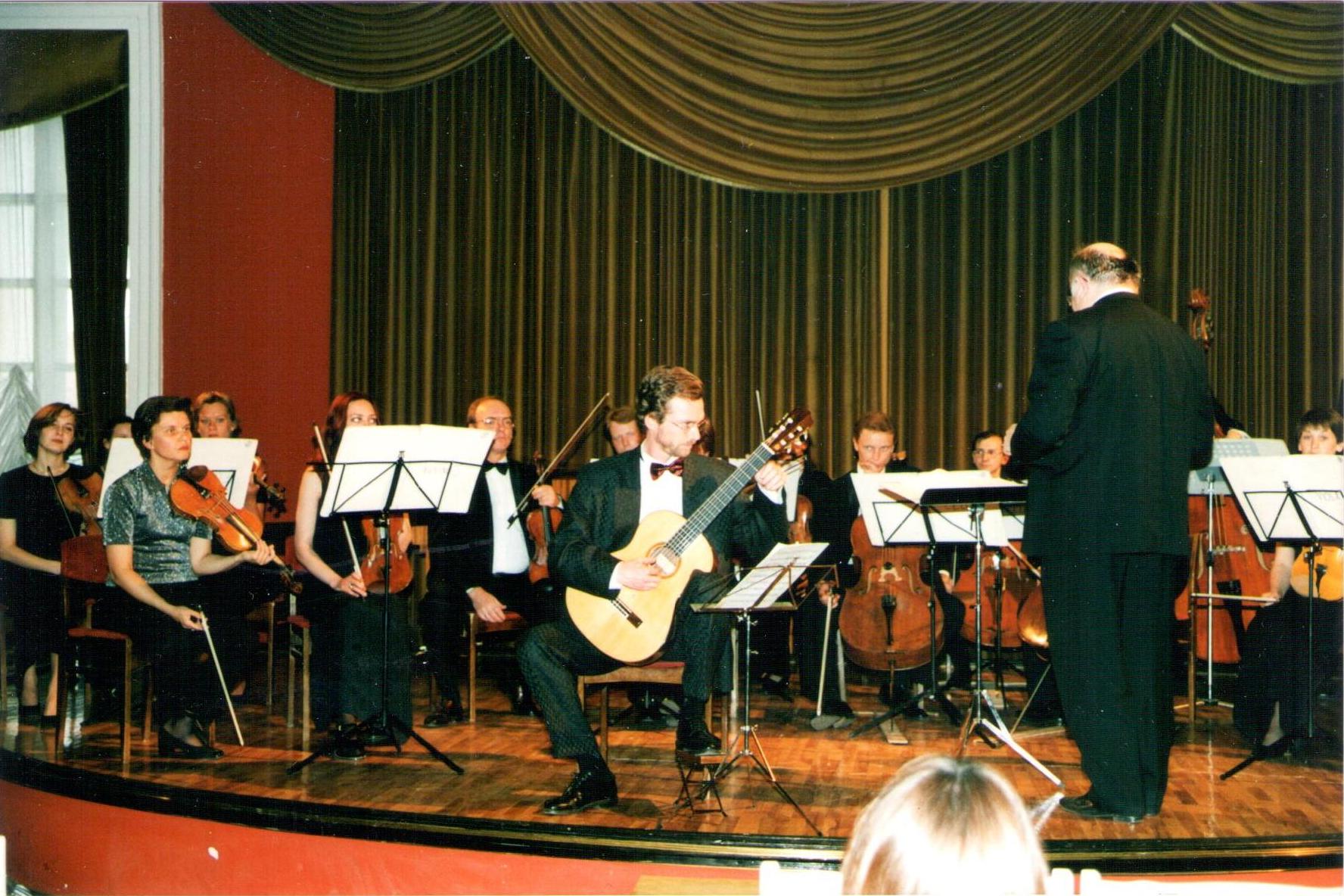
Since my student days I have not only appeared in concert as a soloist but have also performed regularly and with particular enthusiasm as a chamber musician. Over the years this has enabled me to collaborate with many outstanding colleagues, as well as with distinguished orchestras and conductors at home and abroad, whether live and unplugged on stage or in the seclusion of the studio for radio and recording productions. Between 1994 and 2005, a particular geographical focus was Lithuania, newly independent at the time, where I had the opportunity to work with remarkable musicians. One such collaboration, with the Čiurlionis String Quartet of Vilnius, was awarded second prize at the International Chamber Music Competition in Schweinfurt in 2001 — where I was the only German participant to reach the final round — this being the highest distinction granted to an ensemble with guitar.
Yet even such successes do not suffice to make a living from concert performance alone. For that reason, I have always been active as a teacher — from work with children and young people to professional training and continuing education. A short-term teaching appointment at the University of Music in Karlsruhe marked my entry into higher education. From 2003 to 2012 I taught the guitar course for music education students at the Mannheim University of Music. From 2006 to 2021 I served as a faculty member in guitar at the University of Music Trossingen, where I taught guitar as a major subject and offered the four-semester course “Contemporary Music for Guitar,” which regularly concluded with the “Days of New Guitar Music” that I organised.
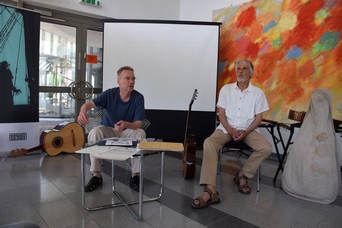
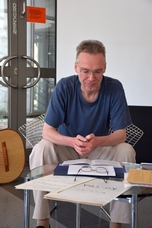
I had previously written and published occasional texts on various guitar-related topics. It was the course on contemporary music, however, that led me to undertake my most extensive research project: the long-lost first guitar work of Hans Werner Henze, his 1955 music for the radio novel Der sechste Gesang (The Sixth Canto). I was able to locate the manuscript and give the music its posthumous premiere in 2016, in its original context. My detailed essays on this subject were published in various music journals and attracted international interest.
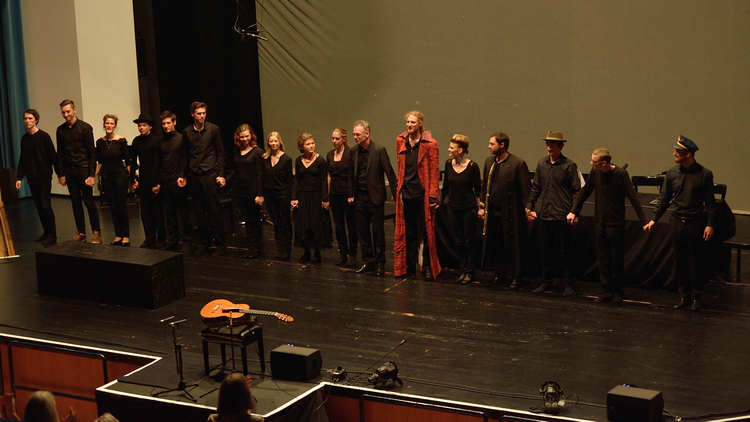
I am regularly invited to give lectures on topics such as Hans Werner Henze’s early guitar music and my reflections on instrumental technique, shaped by Gerrit Onne van de Klashorst and set out in detail in my 2020 book Gitarrentechnik meistern mit musikphysiologischem Wissen (Mastering Guitar Technique through an Understanding of Musicians’ Physiology). Such invitations are always welcome opportunities for collegial exchange.
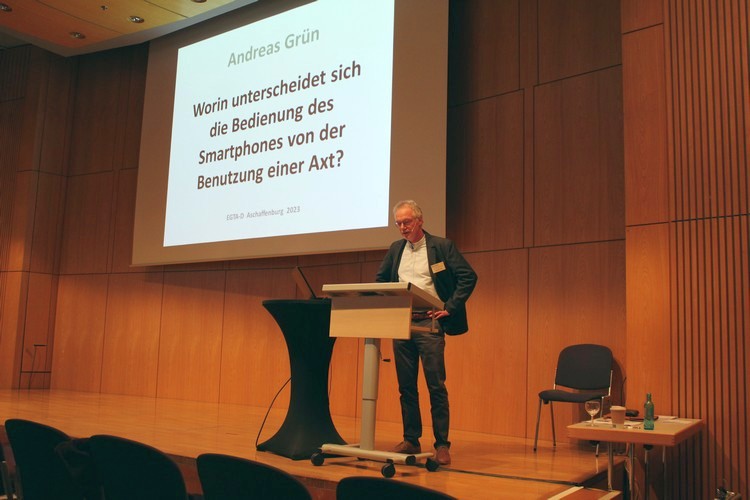
My concert activity may have become somewhat less frequent than in earlier years, yet performing — both in chamber music and as a soloist — continues to give me great pleasure.
I take particular pride in the fact that a number of my former pupils and students have themselves gone on to become successful musicians, prizewinners in competitions, or university teachers. I continue to offer private tuition in Karlsruhe — for beginners, as preparation for entrance auditions, and, in the spirit of lifelong learning, as continuing professional development for guitar teachers and concert guitarists, including, where necessary, practical guidance in adopting a physiologically well-grounded technique to prevent — or, if need be, to overcome — faulty posture or playing disorders.
| Home | Profile |  |
Repertoire | Works | Contact |